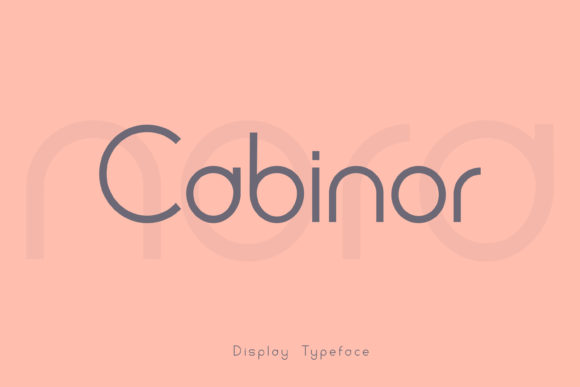
Cabinor: A Modern Display Font for Web Designers Who Care About Style
As a web designer working on a boutique coaching site, I was looking for a typeface that could bring personality to the hero section without sacrificing clarity or load time. That’s when I discovered Cabinor — a modern, simple sans serif font that immediately stood out for its clean aesthetic and versatility. I dropped it into the landing page header and started testing how it performed across devices, layouts, and brand tones.
First Impressions: Crisp, Contemporary, and Confident
Cabinor has a minimal structure with just enough character to feel distinctive. The rounded edges and open spacing give it a friendly yet professional tone, making it ideal for modern digital brands that want to feel approachable but polished. I used it in the hero banner over a soft lifestyle image and was immediately impressed by how well it balanced legibility with visual impact.
What stood out was how Cabinor didn’t feel too “techy” or cold, which is a common issue with many sans serif fonts. It added warmth to the design without veering into overly decorative territory. It’s a display font that works well in web headers, callouts, and branding elements — especially when you need something more expressive than a standard system font.
Responsive Design and Real-World Readability
I tested Cabinor on mobile and tablet layouts to see how it held up in smaller sizes. On mobile hero sections, the font remained legible and didn’t blur into the background, which is crucial for user engagement. I found that using it at around 24px or higher on body headings worked best, especially when paired with a clean sans serif for supporting text.
One thing to keep in mind is that Cabinor is better suited for short bursts of text — think headlines, section titles, and CTA buttons — rather than long-form body content. I tried using it for a features section and found it worked beautifully for subheadings but wasn’t ideal for dense paragraphs.
Pairing Cabinor with Other Web Fonts
Font pairing is essential in web design, and Cabinor plays well with others. I paired it with a minimalist sans serif for body text and noticed a clear visual hierarchy forming. The contrast between Cabinor’s modern curves and the simplicity of the secondary font created a balanced, visually engaging layout.
For a more editorial feel, I also tried combining it with a light serif font in a testimonials section. The result was elegant and easy on the eyes. If you're designing a creative portfolio or a personal brand site, Cabinor can serve as a strong typographic anchor when paired thoughtfully.
Practical Uses for Cabinor in Web Projects
I used Cabinor across several digital assets, including:
- Landing page headlines
- Call-to-action buttons
- Logo text for a lifestyle brand
- Section headers in a course sales page
- Hero text over image banners
In each case, the font elevated the design without overpowering the layout. It felt especially at home on a portfolio homepage, where its modern simplicity complemented visual content without competing with it. On a coaching site, it brought a sense of calm confidence to the brand voice.
What to Watch Out For
While Cabinor is a strong performer in many web contexts, it’s not a one-size-fits-all solution. Avoid using it for:
- Small navigation labels
- Dense dashboard interfaces
- Long-form blog content
- Accessibility-sensitive text
Its decorative nature, though subtle, can make it less ideal for UI elements where clarity and speed of recognition are critical. Also, if you're designing for a more traditional or formal brand, you might want to explore serif or more classical sans serif fonts instead.
Technical Notes and Licensing
Before implementing Cabinor in a client project, I made sure to check the available styles, webfont compatibility, and licensing terms. The font includes multiple weights and supports a wide range of languages, which is a plus for international brands or multilingual sites.
It’s also important to verify that the font is licensed for commercial use, especially if you're embedding it in a client's site or using it in downloadable templates. I was happy to find that Cabinor’s licensing was clear and straightforward, making it easy to integrate into both personal and professional web design work.